Electronic logging devices, or ELDs, have become something of a hot topic in the last year, thanks to the passing of a new FMCSA rule mandating their use for Records of Duty Status (RODS) reports.

As a result of the focus on ELDs, many fleet managers have questions about the rule. One frequently asked, but rarely answered, question about ELDs is: “What does an electronic logging device really log, anyway?”
The answer varies a bit depending on the specific ELD you choose. However, if your logging device meets all of the minimum requirements the FMCSA sets for ELDs, then it should be able to track the following:
1: Vehicle Locations at Set Points Throughout a Duty Shift
At a minimum, an ELD should be able to log where a vehicle is:
- When the engine is started or turned off;
- Once every 60 minutes of operation;
- Whenever there’s a change of duty status; and
- At the beginning of personal use and yard moves (if applicable).
This allows fleet managers to see where their vehicles have been, and may even serve as a deterrent to illicit use of vehicles.
2: Idle Time/Prolonged Stops
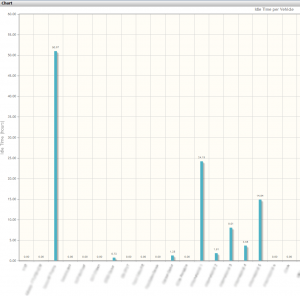 One of the requirements for an ELD is that if the vehicle is stopped for five consecutive minutes and the driver hasn’t responded to a system prompt for over a minute, then the ELD will log a default duty status of “on-duty not driving.”
This can be used to help log when a driver has brought the vehicle to a stop for a prolonged period of time, such as when the driver is loading/unloading the vehicle. Alternatively, this could be used to spot prolonged unscheduled stops where stops should not be made by comparing the registered “on-duty not driving” status changes to the driver’s schedule and the vehicle’s GPS data log.
Frequent unscheduled stops could be an indication of a problem with a driver’s adherence to route or schedule.
3: Data Tampering
Any ELD rule-compliant device should have a method for tracking any alterations that have been made to the data recorded by the ELD. Also, ELDs should be able to log data inconsistencies that might indicate tampering with devices or data.
This can help fleet managers spot potential attempts to bypass the ELD by drivers, helping to drive compliance with the rule and preventing sabotage.
4: How Long Drivers Have Been Working
Of course, one of the most basic goals of using an ELD is to verify compliance with Hours of Service (HOS) regulations. ELDs accomplish this by tracking when a vehicle is first turned on and when that vehicle is shut down once again.
This makes tracking the time that your drivers spend on the road (and whether or not they’re approaching their HOS limits) incredibly simple for fleet managers.
These are just some of the things an electronic logging device can track if the device meets the bare minimum requirements.
However, if you get a tracking device that exceeds the bare minimum requirements set forth by the FMCSA, there are a lot of other statistics that you could track to further improve your fleet management.
What are these statistics, and the benefits of having them at your disposal? Check out some of our other resources on GPS tracking to find out!

Like what you're reading? Subscribe to our blog.
Get our latest posts straight to your inbox.
Subscribe to Our Blog